Piercing Jewellery Materials: Implant-Grade Titanium, Surgical Steel, Gold — Why It Matters
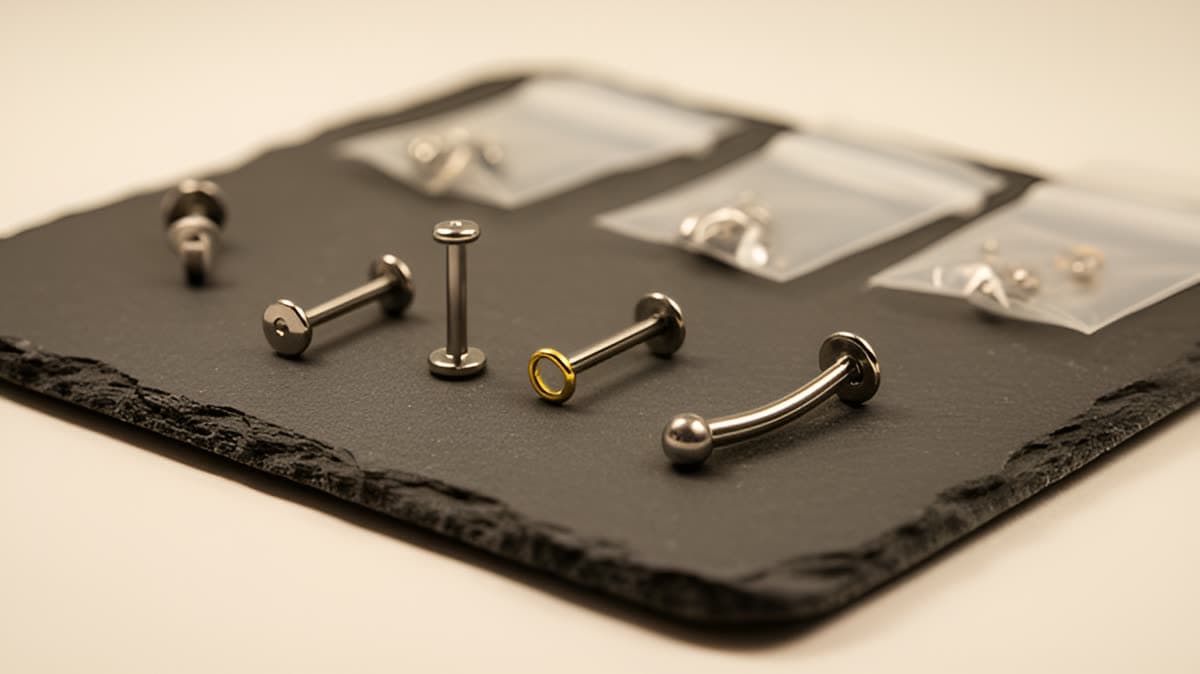
When people plan a new piercing they usually think about placement and the shape of the jewellery first. Yet one of the things that affects healing the most is what the jewellery is made of. A fresh piercing is an open wound, and the jewellery sits inside it for weeks or even months. So before getting pierced in Kyrenia or anywhere else, asking about the material is as important as asking whether the needle is sterile.
In this guide we cover implant-grade titanium, surgical steel, gold and other options in plain language: which are suited to a fresh piercing and which are better kept for a healed one.
—Why does the material matter so much?
During healing the jewellery is in constant contact with tissue. Metal ions can be released from its surface, and the body can react to some metals, especially nickel. Nickel allergy is one of the most common contact allergies and can show up as redness, itching, discharge or a healing process that drags on. These signs are easily mistaken for an infection.
Surface quality matters too. Jewellery that is scratched, rough or has flaking plating creates places for bacteria to cling to and irritates the tissue. In short, good jewellery is made from a body-compatible alloy, has a mirror polish and is the right size.
—Implant-grade titanium: the usual choice for a first piercing
The material most professional piercing studios recommend for initial jewellery is implant-grade titanium. This does not mean any "titanium-look" piece, but an alloy that meets the standards defined for medical implants. The best-known specification is ASTM F136 (Ti-6Al-4V ELI); ASTM F1295 and ISO 5832-3 belong to the same family.
Why is it preferred?
- It is nickel-free or contains negligible amounts, making it a safe start for people with nickel sensitivity.
- It is light, so you barely feel it in areas such as ear cartilage or the nose.
- It can be anodised: titanium can be turned gold, blue, purple and other colours using electric current rather than dye. The colour is an oxide layer on the surface, not a coating.
A word of caution: not everything labelled "titanium" is implant grade. Don't hesitate to ask the studio which standard the jewellery meets and, if possible, to see the manufacturer's mill certificate.
—Surgical steel: not all steel is equal
"Surgical steel" sounds reassuring, but it is not a strictly defined legal term. The steel accepted for body piercing is 316LVM stainless steel that meets ASTM F138, a standard written for implants.
The key point: this steel does contain nickel. Because the alloy binds the nickel tightly, many people wear it without problems, but for anyone with a known nickel sensitivity titanium is the safer choice. The unspecified "316L" or unlabelled steel used in cheap jewellery is not recommended for a fresh piercing.
—Gold: the right karat and the right alloy
Gold is an elegant option for piercings, with a few conditions:
- It should be solid gold; gold-plated, gold-filled or vermeil pieces are not recommended for a fresh piercing. Plating wears away over time and exposes the base metal to the tissue.
- 14k or 18k is typically used. 24k pure gold is very soft, scratches easily and can deform, while 10k contains a high proportion of other metals and is not recommended by most piercers.
- The alloy should be nickel-free. Some white gold contains nickel, so ask the seller or the studio.
Wearing gold in a healed piercing is fine for most people. If you'd like gold as your initial jewellery, discuss whether it suits you with your piercer.
—Other materials: niobium, glass and what to avoid
Niobium: like titanium, it is nickel-free and can be anodised. Some studios use it especially for rings. It does not have an implant standard as widely used as titanium's, so if you choose it, make sure it comes from a reliable source.
Glass: good-quality borosilicate glass is body-compatible and can be useful in some situations, for example for people with metal sensitivities or before medical imaging.
To avoid in a fresh piercing:
- Sterling silver (925): it tarnishes (oxidises) in contact with body fluids and can stain the skin. It can be worn briefly in a healed piercing but is not suitable as initial jewellery.
- Acrylic and plastic jewellery: can be porous and is hard to sterilise.
- Plated and fashion jewellery: it is usually unclear which metal is under the plating.
—Other details to check when choosing jewellery
The construction matters as much as the material:
- Internally threaded or threadless (push-pin) jewellery irritates the tissue less when inserted and removed than externally threaded pieces.
- A mirror-polished surface: no scratches or rough spots.
- The right gauge and length: initial jewellery should be long enough to allow for swelling; once the swelling settles it is usually swapped for a shorter piece (downsizing). It's best to have this done at the studio rather than doing it yourself.
If you're wondering which jewellery suits each part of the ear, see our guide to ear piercing types, and for the whole first-piercing process read our first piercing guide for Northern Cyprus.
—Frequently Asked Questions
I have a nickel allergy. Can I get pierced?
Usually yes; the key is choosing a suitable material such as implant-grade titanium or nickel-free solid gold. If your allergy is severe, talk to your doctor before getting pierced and always tell the studio about it.
What colours does titanium jewellery come in?
Besides its natural grey, anodising can make it gold, rose, blue, purple and more. These colours are not paint; they can fade over time but do not harm the tissue.
When can I change my jewellery?
The first change is usually a downsize to a shorter piece once the swelling has gone down; the timing depends on the placement. Before switching to different jewellery altogether, make sure the piercing has healed and have the studio check it.
Can the studio insert jewellery I bought online?
That depends on the studio's policy. Many studios won't put jewellery into a fresh piercing if they can't be sure of its material and sterility. We recommend asking JBA Cyprus about this in advance.
Is the redness caused by the jewellery or an infection?
Mild redness and swelling are normal in the first days of healing. If you notice increasing pain, heat, dark or foul-smelling discharge or a fever, see a doctor without delay.
—Conclusion
A good piercing experience starts with the right placement, the right technique and the right material. For initial jewellery, implant-grade titanium is a safe start for most people; gold and other options, in the right karat and alloy, are mostly chosen for healed piercings.
If you're thinking about a piercing in Kyrenia, drop by JBA Cyprus Tattoo & Piercing or message us on WhatsApp; we're happy to explain which jewellery we use and why. For our address and opening hours, visit our contact page.
The Tattoo Journal
Knowledge Hub
Nose Piercing Aftercare and Healing Timeline: Nostril and Septum
The difference between nostril and septum piercings, typical healing times, daily aftercare steps and what to watch out for with sea, sun and sweat in Cyprus.
Piercing Infection or Normal Healing? Signs and When to See a Doctor
Is redness, swelling or discharge normal in a new piercing? Signs that separate normal healing from infection, irritation and allergy, and when to see a doctor: a guide from Kyrenia.
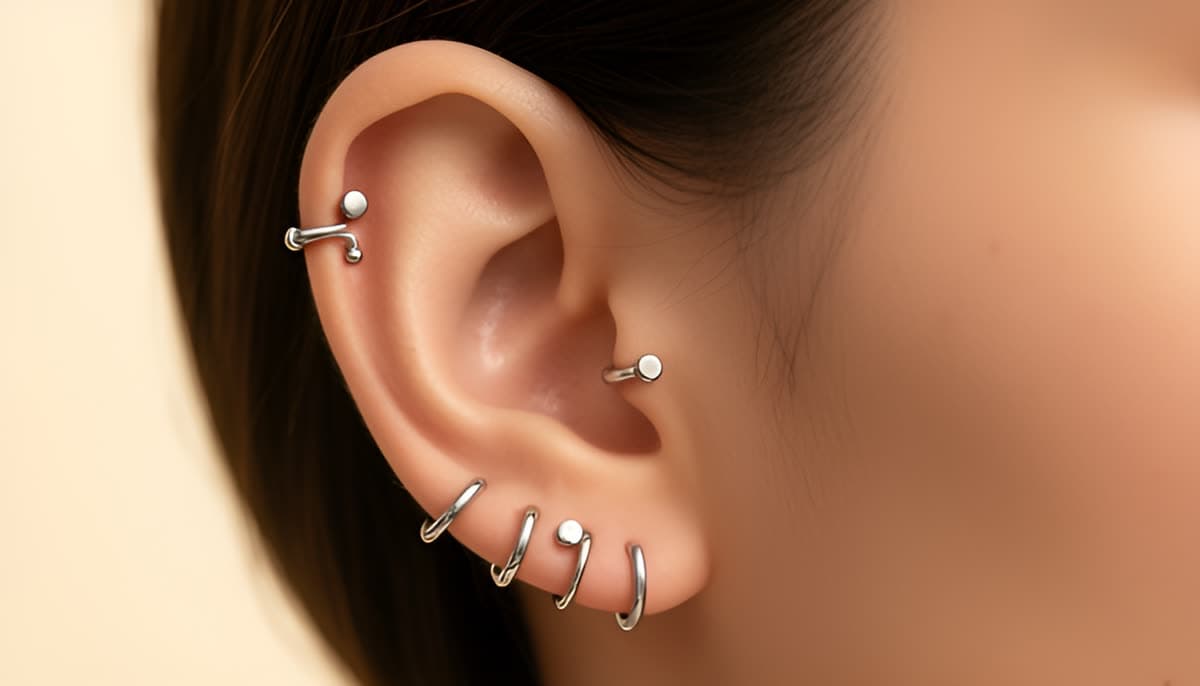
Ear Piercing Types: Lobe, Helix, Tragus, Conch, Daith — Which One Suits You?
A guide to ear piercings in Kyrenia: lobe, helix, tragus, conch, daith, rook and industrial — healing times, who each suits and popular combinations.
Your Masterpiece Awaits
Secure your session at the Mediterranean's premier tattoo destination. Connect with us on WhatsApp for a professional consultation and booking.
Reserve Your Session